In precision machining, especially for small-diameter shaft components, productivity does not only depend on equipment capability. Material machinability and dimensional stability are often the decisive factors that determine whether a production run proceeds smoothly or turns into repeated rework.
Among free-machining stainless steels, 303Cu stainless steel stands out as a material specifically optimized for high-efficiency turning and stable batch production.
Why Machinability Matters in Precision Shaft Parts
For precision shafts with diameters around 3.0 mm, machining challenges increase significantly. Tool breakage, unstable cutting, burr formation, and dimensional drift are common issues when material consistency is insufficient.
A material that cuts smoothly, produces controlled chips, and maintains uniform hardness across the batch directly reduces tool wear and improves cycle time. This is where 303Cu demonstrates clear advantages.
Composition and the Role of Copper in 303Cu
303Cu is a modified version of standard 303 stainless steel, with a controlled addition of copper. This copper addition enhances chip breakability and reduces cutting resistance during turning operations.
Unlike conventional austenitic stainless steels that tend to produce long, stringy chips, 303Cu generates short, manageable chips that improve machining stability and surface quality.
Dimensional Control for Small Diameters
Precision shaft components require more than nominal size accuracy. Roundness, straightness, and tolerance consistency are critical for ensuring proper assembly and long-term performance.
For 303Cu stainless steel bars designed for precision machining:
-
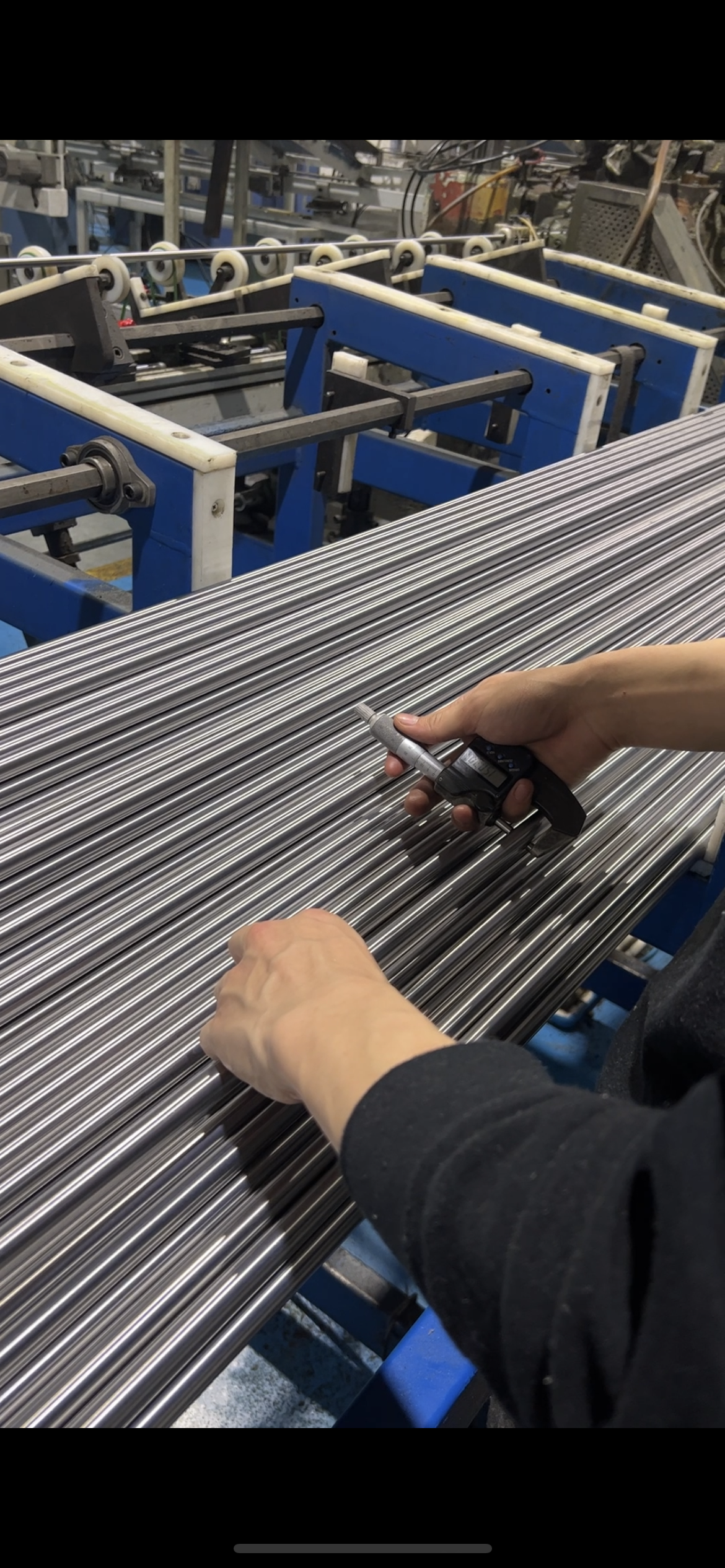
Diameter tolerance can be controlled to -0.005 mm
-
Roundness can be maintained within 2 μm
-
Straightness remains stable throughout the bar length
Such control minimizes secondary finishing operations and allows parts to be machined directly to final dimensions.
Hardness Uniformity and Its Impact
With a hardness range of HV250–300, 303Cu achieves a balance between strength and machinability. More importantly, hardness uniformity across the entire batch ensures predictable cutting behavior.
Inconsistent hardness often leads to uneven tool wear, vibration, or unexpected cracking during machining. A uniform hardness profile allows operators to maintain stable cutting parameters over long production runs.
Stress Relief and Straightness Stability
Precision stainless steel bars used for automatic lathes and Swiss-type machines must maintain straightness during machining. Internal residual stress can cause deformation once material is removed.
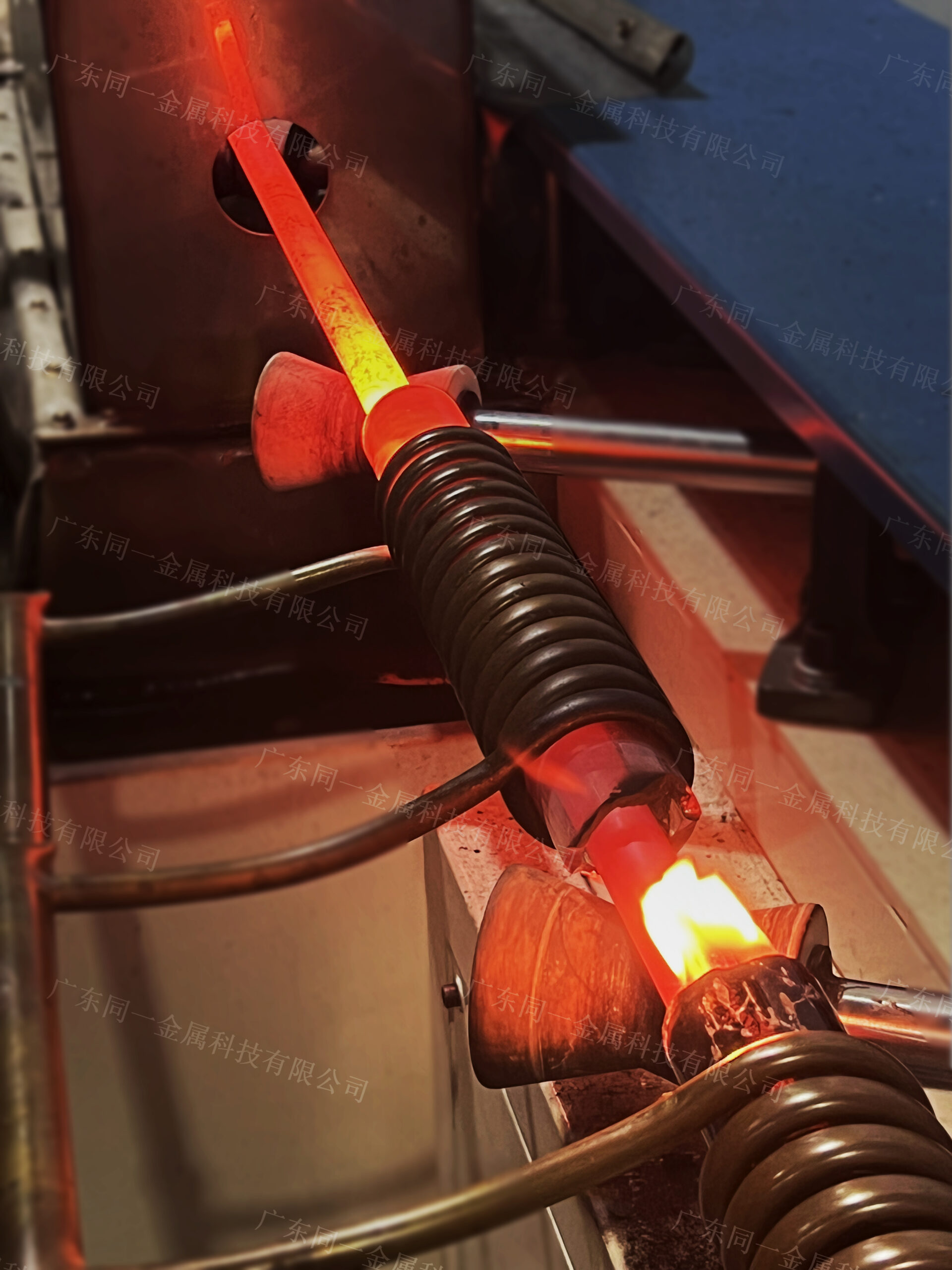
303Cu precision bars undergo stress-relief processing to ensure straightness stability, reducing the risk of bending or distortion after turning.
Typical Properties of 303Cu Stainless Steel Bars
| Property | 303Cu Stainless Steel |
|---|---|
| Machinability | Excellent |
| Diameter Tolerance | Up to -0.005 mm |
| Roundness | ≤ 2 μm |
| Hardness | HV250–300 |
| Straightness Stability | High |
| Chip Control | Short, stable chips |
These characteristics make 303Cu particularly suitable for high-volume precision machining environments.
Performance on Automatic Lathes and Swiss-Type Machines
In automatic turning and Swiss-type machining, stable cutting behavior is essential. 303Cu’s free-machining characteristics allow tools to engage smoothly without chatter or sudden load spikes.
This stability reduces the risk of micro-cracks, tool chipping, or unexpected part failure during production. As a result, machining efficiency improves while scrap rates decrease.
Reducing Hidden Production Costs
Material selection directly affects not only machining speed, but also tool life, inspection workload, and downtime. By using a material optimized for machinability and dimensional consistency, manufacturers can significantly reduce hidden production costs.
303Cu helps streamline machining workflows by reducing tool changes, minimizing rework, and improving overall yield.
For precision shaft components, ease of machining is not a convenience—it is a necessity. 303Cu stainless steel bars provide controlled machinability, tight dimensional accuracy, and batch consistency that support efficient, stable production.
When machining performance and dimensional reliability matter more than raw strength, 303Cu remains a practical and proven material choice for precision manufacturing.