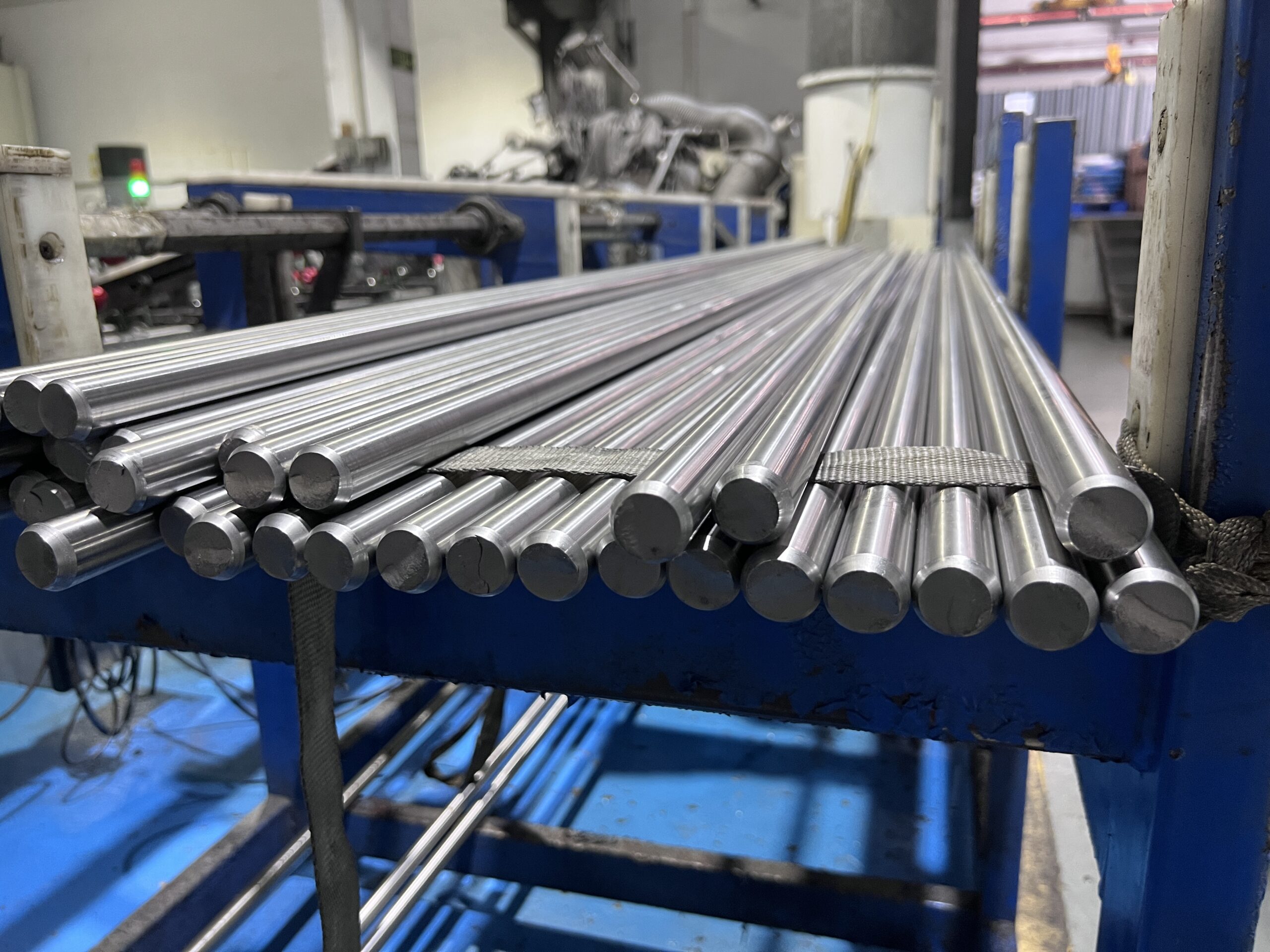
Titanium bars priced at over 200 per kilogram often raise questions: why would manufacturers choose such an expensive material when steel or aluminum is far more affordable? The answer lies not in cost, but in performance boundaries that conventional metals simply cannot reach.
Titanium is not designed for mass substitution. It exists to solve problems where strength, weight, corrosion resistance, and safety must all coexist—without compromise.
Exceptional Strength-to-Weight Ratio
One of titanium’s most defining characteristics is its outstanding strength-to-weight ratio. Titanium alloys can achieve strength levels comparable to high-strength steels while weighing approximately 40% less. This unique balance allows engineers to design lighter components without sacrificing structural integrity.
In applications where weight reduction directly improves performance, efficiency, or user comfort, titanium becomes a logical choice rather than a luxury.
Natural Corrosion Resistance
Titanium forms a stable and self-healing oxide layer on its surface when exposed to air. This natural passivation protects the metal from corrosion in harsh environments, including seawater, bodily fluids, and chemical exposure.
Unlike coated materials, titanium does not rely on surface treatments that may wear or peel over time. Its corrosion resistance is inherent, stable, and long-lasting.
Biocompatibility and Safety
Titanium is widely recognized for its excellent biocompatibility. It does not trigger adverse reactions when in contact with human tissue, making it a preferred material for medical implants such as bone screws, joint replacements, and dental components.
This biocompatibility, combined with corrosion resistance, ensures long-term safety inside the human body, even under continuous mechanical stress.
Dimensional Stability and Fatigue Resistance
In high-end applications, components are often subjected to repeated loads and cyclic stress. Titanium exhibits strong fatigue resistance, maintaining dimensional stability over long service periods.
This characteristic is particularly valuable in medical devices and premium sports equipment, where failure is not an option and reliability is critical.
Why Titanium Bars Cost More
The higher cost of titanium bars reflects not only raw material value, but also complex processing requirements. Titanium extraction, melting, and forming demand controlled environments, specialized equipment, and strict quality control.
Each stage—from sponge production to forging and precision bar finishing—adds to the final cost, but also ensures performance consistency and safety.
Typical Application Areas
Titanium bars are not intended for general-purpose manufacturing. They are selected when performance thresholds exceed what standard metals can deliver.
| Application Field | Key Requirement |
|---|---|
| Medical Implants | Biocompatibility, corrosion resistance |
| Surgical Instruments | Strength, sterilization resistance |
| High-End Sports Gear | Lightweight, fatigue resistance |
| Aerospace Components | High strength, low mass |
| Marine Equipment | Seawater corrosion resistance |
Material Selection as a Strategic Decision
Choosing titanium is not about following trends. It is a deliberate engineering decision based on lifecycle performance, risk reduction, and safety margins.
In many cases, titanium reduces long-term costs by extending service life, minimizing maintenance, and preventing catastrophic failure.
High-value titanium bars exist because certain industries demand more than ordinary materials can offer. Their strength, lightness, corrosion resistance, and biocompatibility define a performance envelope that few metals can match.
For applications where safety, reliability, and long-term stability matter more than upfront material cost, titanium is not an option—it is a necessity.